
Research & Achievements
Our consulting services are based on all our PUBLISHED RESEARCH WORKS in journals, congresses, conferences, and other specialized events, with a high impact factor (IF), resulting, in turn, almost all of them from our own Doctoral Theses and others directed or co-directed by university imperative, Master’s Theses, DEAs and Final Degree Projects directed as well.
IT IS NOW POSSIBLE TO MANUFACTURE NEW PC-BASED CEMENTS WITH CC ON AN INDUSTRIAL SCALE, WHICH POLLUTE THE ENVIRONMENT MUCH LESS, THEREBY SIGNIFICANTLY REDUCING THE CURRENT CONTRIBUTION OF CEMENT PLANTS TO GLOBAL WARMING
The key to our approach is to use new technologies for more or less aerobic heating of less or more reddish clays, respectively, and new analytical and testing chemical methods that very quickly and efficiently optimize their optimal thermal activation, thus significantly reducing CO2 emissions from manufacturing PC if the quality of the matrix clay is adequate because, once calcined, its Al2O3r– (%) content is the maximum possible, regardless of its kaolinite content (see a clay quarry in the “Images” section).

By replacing PC with these clays activated at the appropriate temperature and aerobic conditions, not only is the efficiency and durability of reinforced concrete structures improved against the aggressive chemical attack of de-icing salts, sea spray, seawater, and aggregate><alkali reactivity (AAR), but also the current contribution of cement Plants to climate change is powerfully mitigated because the resulting mixed cements are more eco-efficient and environmentally friendly than PC. And even more so the more they replace it, because the quality of the matrix clay is higher. This enables them to resist even the attack of sulfates from selenite waters and soils, as is the case in Spain and many other Mediterranean countries.
CLINKER AND PORTLAND CEMENT (PC) AND CALCINED CLAYS (CC) AT APPROPRIATE TEMPERATURE ALSO MANUFACTURED IN A CEMENT PLANT (see their kilns in the “Images” section)
Chemical, physical, and mineralogical composition
Behaviour of their pastes in a fresh state (rheological behaviour), newly set and hardened (calorimetric behaviour and, consequently, plastic, thermal, and drying shrinkage: volume stability), and fully hardened: their mechanical strengths and durability against attack, separately and exclusively, from sulphates and chlorides, or together in seawater, attack from CO2 in the air (carbonation) and AAR.

Idem, but with different amounts of calcined clays (CC), calcined shales, natural and calcined pozzolans, fly ash, silica fume, GGBFS, limestone or siliceous filler, and other natural and artificial SCMs, separately or not. Chemical, Physical, Particle Size Composition, and Chemical Character.
The chemical character of MCSs, both natural and artificial pozzolan types, is determined by their hydraulic factors: reactive silica (SiO2r– (%)) (UNE Standard 80225:2012) and reactive alumina (Al2O3r– (%)) (Talero method), but, above all, by the latter content (%), which, under equal circumstances and all other things being equal, is the most determining and significant of the two.
The chemical character of pozzolan determines, in turn, the expected performance of its pastes with PC in their fresh, newly set, hardened, and fully hardened: their Mechanical Strengths and Durability mentioned and those of their derived products: concretes, mortars, gunites, pastes, grouts and prefabricated parts.
Chemical characterization (including pozzolanic), physical characterization (including particle size distribution) and mineralogical characterization of calcined clays (CC) produced in cement Plants, for use in new cements that are more eco-efficient and environmentally friendly than current ones. Quality Control of the CC produced (and their chemical verification) and of the referred new blend cements with PC or PC/CC blend cements.
Towards “Greener” Cement
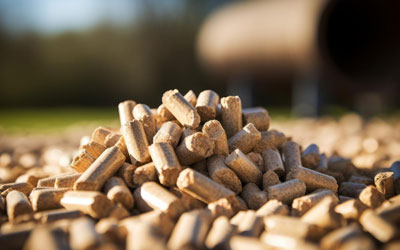
Alternative Fuels
Use of alternative fuels for cement manufacturing, especially biomass.

Silobas Covers
Automated silobas covers for human safety, decreased cycle-time, and reduced dust emissions.
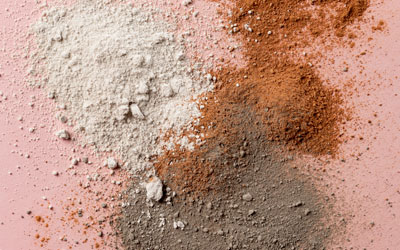
Calcined clay
Production of calcined clay to significantly reduce CO2 emissions in cement manufacturing.
Chemical characterization (including pozzolanic), physical characterization (including particle size distribution), mineralogical characterization, and mechanical characterization of calcined clays produced in cement Plants, for use in new cements that are more eco-efficient and environmentally friendly than current ones. Quality Control of the CC produced (and their verification) and of the referred new cement blends.
Low-clinker + Low CAPEX + Low OPEX solutions: “Low-Carbon Cements” replacing PC with CC in appropriate amounts for each construction use: determination of the optimal setting regulator (natural gypsum stone) amount using physical and mechanical methods for each new blend cement manufactured. Whether conventional, expansive, or non-shrink.
Durability of the new PC/CC cements designed, formulated, and dosed and their derived products (concretes, mortars, gunites, pastes, grouts, and premanufactured concrete elements) against attack by the most common aggressive natural chemicals abundant in nature: sulphates, chlorides, seawater, CO2 in the air (carbonation), and AAR.
Rheological and calorimetric behaviour of PC pastes with natural and artificial pozzolans and/or GGBFS and/or crystalline mineral additions: limestone or siliceous.
NOTE: European (EN) and North American (ASTM) Standards have been considered for the referred experience.